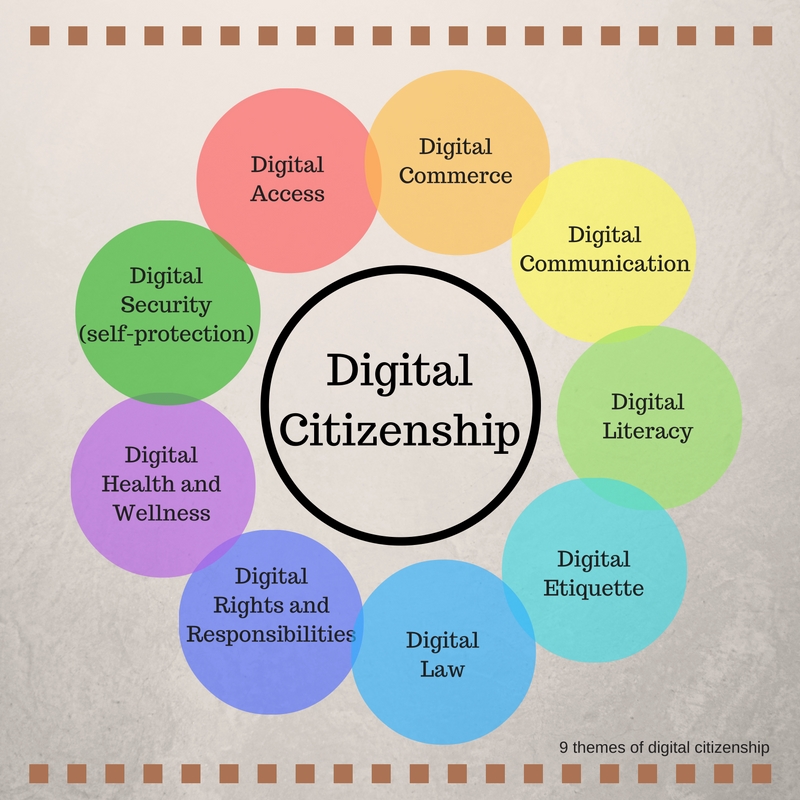
With digital technology being a predominant part of people’s lives, it is becoming increasingly important that all technology and internet-users understand and practice digital citizenship. A lack of digital citizenship can be demonstrated in a variety of ways such as speaking inappropriately on social media, posting a photo of another person without their permission, speaking informally in a professional email, texting in the middle of a conversation, or having technology and online profiles that are not properly protected. It can also be manifested in much worse ways that can have extreme consequences. Firstly, cyberbullying has justifiably become a major concern for many teachers and parents. A Science Daily article published in 2018 states that, “children and young people under 25 who are victims of cyberbullying are more than twice as likely to self-harm and enact suicidal behaviour.” Secondly, over the past few years we have seen the emergence of online “challenges” which encourage and pressure young and vulnerable people into completing harmful tasks. These have included the Tide Pod, fainting, Blue Whale, and Momo Challenges. With each of these things in mind, digital citizenship is important because it ensures that both ourselves and others are safe and healthy in a digital world. It guides us in acting ethically and responsibly online and can provide young people with the knowledge and skills to make wise decisions when using technology.
As a future teacher, it will be my responsibility to help students navigate the technology that dominates much of their daily lives and in doing so foster digital citizenship. What I have gathered from our class discussions this week and from the resources we have explored, is that digital citizenship cannot be taught in isolation but rather must be continuously integrated into our curriculum. For example, digital etiquette could be discussed in courses like Planning 10 by having students write business emails to potential employers. Digital literacy could be practiced through searching for valuable information online and differentiating between fact and opinion as a part of regular English classes. Digital commerce could be woven into mathematics and projects related to digital health and wellness could be included in Health classes. Digital communication, security, and responsibility could be incorporated into Social Studies classes by having students create Twitter accounts and share their thoughts with classmates via a social media platform. As Lisa Jones and Kimberly Mitchell explain in the article Defining and Measuring Youth Digital Citizenship, it is important to “provide them [students] with interesting opportunities and activities to practice support and respect in their personal online environments” (pg. 13). I hope that in doing so, my students will learn to think critically about both the potential harm and power of technology while learning how to use it responsibly, ethically, and effectively.
To further aid my student in developing digital citizenship, I will stay well-informed and aware of current technological and social media trends through resources such as Common Sense Media. This will allow me to maintain an open and ongoing discourse in my classrooms about digital citizenship based on up-to-date information. Ideally, should an issue arise, students will feel comfortable to seek help from myself or others as a result of this openness.
 Teaching with Technology